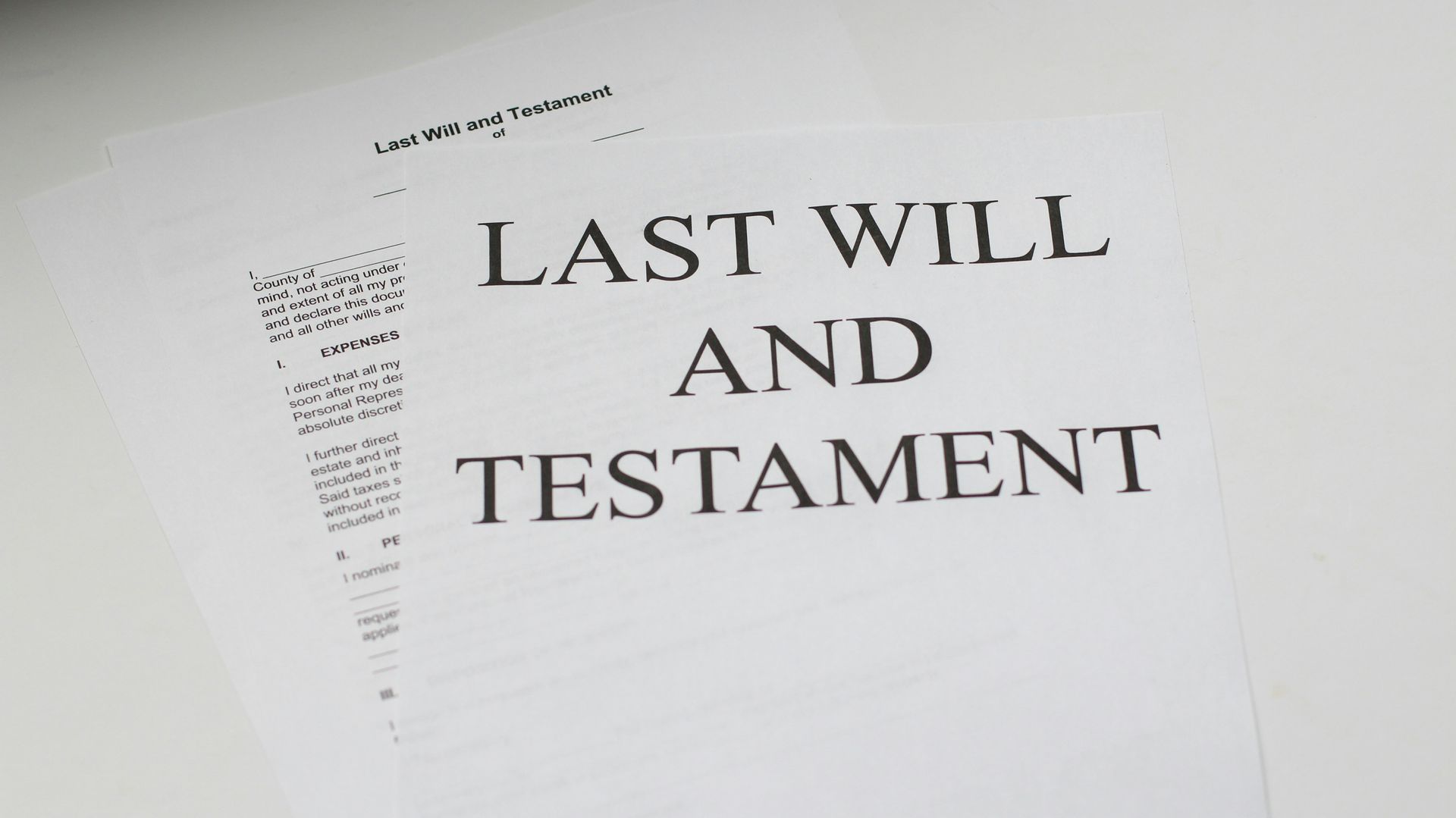
Did you know that this can affect your Will?

March 1, 2023

2023 could be the year of change for you, whether it be a new home, new job, marriage, divorce, or a new member of the family. Whatever it might be, are you aware of some of the different ways in which your Will could be affected?

New Home

If you have bought a new home, congratulations! Does your current Will include your previous home address? If so, please get in touch with your will writer to have your Will updated to ensure your new property is covered in your Will.

What if this is not done? If for example your current Will gifts a property to your son and this property does not exist at the date of your death, the gift will fail.

Marriage

Did you know that marriage automatically revokes a Will? If your intention is for all your assets to go to your new spouse this is fine but at times, if you have children from a past relationship that you want to provide for, they can be disinherited. This would have the effect that on your death, your children receive nothing, everything passes to your new spouse and then to their loved ones.

Of course, your children could challenge the will under the 1975 Inheritance (Provision for Family and Dependants) Act, but this is costly and time-consuming.

To prevent the above, it is best to review your existing Will before you get married and either re-write it or include a contemplation of marriage clause in it. This is where you express a contrary intention to the ‘automatic revocation’ of your Will upon getting married. Specifically, this clause is a declaration within your Will that your intended marriage to your potential future spouse shall not have the effect of revoking your Will.

Divorce

Whilst divorce does not automatically revoke your Will, the reality is that you probably will not want your ex-spouse to benefit from your Will or any part of your estate.

The good news is that the ex-spouse is treated as if they died when the divorce was finalised (decree absolute) and therefore cannot inherit from you. If there are any gifts to them in your Will, they will fail. However, if you did want your ex-spouse to benefit from your estate or receive something in your Will, you would need to have a provision in your will to state Section 18a Wills Act 1837 will not apply.

Did you know an ex-spouse can try and claim from your estate on your death if they feel as if they should “have been given a piece of the pie” and had reasonable financial provision made for them? The best way to get around this is to exclude them from your Will and have the letter of wishes set out the reasons for this exclusion so if it ever is challenged, the Courts can look at what you have stated and consider it when reaching their verdict.

Children

Your current Will may state “children” or alternatively specifically name your children.

If your Will states “children” this provides for any children that are living at the date of your death. However, if your current Will specifically names your children and you have had more children since, you will need to update your Will to include them also.

With marriage could come step-children so let’s take a look at this now. Apart from legislation relating to the residence nil rate band, did you know step-children are not included in the automatic definition of “children, issue or descendants” when it comes to your Will?

You may class them as your own children as you have looked after them for many years but even if this is the case, they will not benefit if your Will gives your estate to your children. Of course, they can challenge the Will on your death but to prevent costly and time-consuming litigation, if you wish for them to benefit under the terms of the Will, either specifically name them or have “children and step-children” written in the Will. Your estate planner will advise on this during your meeting.

Property Abroad

If you own a property abroad i.e. Dubai? We would advise you to have a Will in place in the country where the property is held. It is important to ensure the Will is restricted to assets in that country only.

Why is this? If you write a Will in 2019 and then see a will writer in Dubai in 2022 and this specific Will is not restricted to assets in Dubai only, your 2019 will be revoked.

If you wish to make amendments to your Will, have a new Will written or any supporting documentation, simply contact Paragon Legal Services Ltd who will be able to assist with putting these changes in place or draft any new documentation for you. Remember, if you have a new Will written, it will revoke any previous Wills.

source SWW


By Julia Newlove February 4, 2026
Making a Will is one of the most important steps anyone can take to protect their family, assets and wishes after death. Yet, despite this, millions of people in the UK still die without one. In 2026, writing a Will or reviewing an existing one, is more important than ever, particularly considering changing family structures, rising asset values, and ongoing developments in Wills and succession law. Whether you are writing your first Will or reviewing a document drafted years ago, now is the time to ensure your wishes are clear, legally effective and fit for modern life. The National Wills Report 2025 found that only 37% of UK adults currently have a valid Will, leaving nearly two-thirds of the population exposed to the consequences of intestacy. Encouragingly, 34% of adults say they plan to make a Will within the year, suggesting growing awareness, but awareness alone is not enough. 2026 is the year to move from intention to action. A Will Gives You Control Over What Happens After Death A Will is a legal document that sets out how your estate should be dealt with after your death. Without a valid Will, your estate will be distributed according to the rules of intestacy. These rules are rigid and often do not reflect modern families or personal views. Having a Will ensures that you, rather than the law, decides what happens to your money, property, and possessions. A properly drafted Will allows you to: Decide who inherits your estate. Appoint executors you trust to administer your estate. Name guardians for minor children. Leave gifts to friends, charities or causes that matter to you. Make provisions for vulnerable beneficiaries. Express funeral wishes and other final instructions. Reduce the risk of disputes or challenges. Exclude people from benefiting under your Will. Without a Will, none of these decisions, and many more, are yours to make. What Happens If You Die Without a Will? If you die without a valid Will, your estate is distributed according to the rules of intestacy. These rules are fixed in law and do not take account of personal relationships, fairness, or individual circumstances. If you die intestate: Your estate is distributed strictly according to law. Unmarried partners receive nothing, regardless of how long you have lived together. Stepchildren are excluded unless legally adopted. The people you would choose to benefit may not inherit at all. Family members may face delays, uncertainty, and additional costs. This can be especially problematic for blended families, long-term cohabiting couples, and those with complex family relationships. The Reality: Most People Still Have Not Acted The National Wills Report 2025 highlights a concerning gap between understanding and action. Only 37% of adults have a Will. 63% of adults remain without one. 29% of people with a Will haven’t told anyone where it is stored. 51% of adults do not know where their parent’s Will is kept. This means that even where a Will exists, it may be difficult or impossible to locate when needed, creating unnecessary stress for families during an already challenging time. Why Updating an Existing Will Is Just as Important Having a Will is not a one-off task. Life changes, and your Will should change with it. A Will that no longer reflects your circumstances can cause just as many problems as having no Will at all. You should review your Will if you have experienced: Changes in Relationships: Marriage or civil partnership In England and Wales, marriage automatically revokes an existing Will unless it was made in contemplation of that marriage. Divorce or separation. New relationships or remarriage. Changes in Family Circumstances: The birth of children or grandchildren. The death of a spouse, partner, beneficiary, or executor. Changes in family dynamics or responsibilities. Changes in Financial Circumstances Buying or selling a property. Significant changes to finances or business interests. Receiving an inheritance. Changes to investments or pensions. As a general rule, Wills should be reviewed every three to five years, even if no major life event has occurred. Modern Families Need Clear, Modern Planning Family structures in 2026 are increasingly complex. Cohabitation, blended families and second marriages are now common, yet intestacy rules remain firmly rooted in traditional family models. A Will is particularly important if you: Live with a partner but are not married or in a civil partnership. Have children from previous relationships. Wish to protect a spouse while ultimately benefiting children. Want to treat children and stepchildren fairly. Support someone financially who is not a close relative. Clear instructions in a Will reduce uncertainty, manage expectations, and help prevent disputes. Legal Developments and Why 2026 Matters Recent years have seen increased attention on the needs to modernise Wills law. In 2025, the Law Commission continued to progress proposals aimed at bringing Wills legislation into line with modern life. Proposals included: Reforming the rule that marriage revokes a Will. Updating the test for testamentary capacity. Allowing courts greater flexibility where formalities are not strictly followed. Exploring the future recognition of electronic Wills. While these reforms are not yet into force, they highlight a crucial point that the law is evolving, but current legal certainty still matters. A clearly drafted, professionally prepared Will remains the safest way to ensure your wishes are legally effective.  Reducing Stress, Delays and Disputes One of the greatest benefits of a clear, up-to-date Will is the reduction of stress for loved ones. When a Will is unclear, outdated or missing altogether, families may face: Disputes between beneficiaries. Claims against the estate. Lengthy probate delays. Increased legal costs. By contrast, a well-structured Will provides clarity at a tough time and helps the estate be administered efficiently. Practical Steps to Take in 2026 To protect your assets and loved ones this year, consider the following actions: Make a Will If you do not currently have one, making a Will should be a priority, particularly if you have children, own property, or live with a partner. Review Your Existing Will Check that it still reflects your wishes, assets, relationships and meets current legal requirements. Ensure Your Will Can Be Found/Located Tell your executors where your Will is being stored and consider registering its location. Additionally avoid “shadow Wills” (unofficial copies or drafts that cause confusion) that cannot be located. Think Holistically A Will should form part of a broader, working alongside tools such as Lasting Powers of Attorney (LPAs) to protect you during your lifetime as well as after death. Final Takeaway A Will is not just a document for later life, it is a practical step that protects the people and things that matter to you, whatever your age or circumstances. With millions of adults still without a Will, and many existing Wills no longer reflecting current realities, 2026 presents a clear opportunity to put plans into place with confidence. Taking the time now to write or review your Will ensures clarity, reduces uncertainty, and gives reassurance to those you leave behind. It is a small investment of time that can prevent significant difficulty in the future. Source SWW
By Julia Newlove January 21, 2026
More couples than ever are choosing to live together without marrying or entering a civil partnership. While this arrangement works well for many, it can create significant inheritance tax and estate planning disadvantages on death. This article explains the main IHT disadvantages unmarried couples face compared with married couples or civil partners, the pitfalls of ‘leaving everything to each other’ (including life interest trusts), and why a nil rate band discretionary trust in a will is often a better planning tool for inheritance tax planning for unmarried couples. Inheritance Tax Planning for Unmarried Couples – Disadvantages Under the Inheritance Tax Act 1984, gifts between spouses and civil partners are generally exempt from IHT (the spousal exemption). Two allowances are central to IHT: · Nil Rate Band (NRB): currently £325,000 per individual. Up to this value, the taxable estate is charged at 0%. · Residence Nil Rate Band (RNRB): an additional allowance (subject to conditions) when a qualifying main residence is inherited by the deceased’s direct descendants. The current value is £175,000. For married couples or civil partners, unused NRB and RNRB can typically be transferred to the survivor, allowing up to two sets of allowances on second death. Unmarried couples do not benefit from these rules. In practice: · Gifts on death to an unmarried partner are potentially chargeable to IHT (subject to available allowances). · There is no automatic transfer of unused IHT allowances between unmarried partners. The transferable nil rate band is designed for spouses or civil partners only. The RNRB also has a practical trap in blended unmarried families. For RNRB purposes, “direct descendants” includes children, grandchildren and certain others; it also includes stepchildren. An unmarried partner’s child is not treated as the deceased’s “direct descendant”, so a gift of part of the home to that child will fail the “closely inherited” condition and the RNRB will be unavailable over that share. This is a key consideration in inheritance tax planning for unmarried couples with children from previous relationships. Leaving Everything to Each Other A common “simple will” choice is to leave everything to the surviving partner outright on first death. For an unmarried couple, that gift is not spouse-exempt. If the estate is above the available allowances, an IHT charge will arise immediately. Even where no IHT is payable on first death (because the estate is under the NRB), the second risk is that by gifting to the partner it will be bunching assets in them and without the benefit of any transferable allowances. Life Interest Trusts and Unmarried Couples Many wills include a life interest trust, either over the whole estate or just over the property (usually referred to as a Property Protection Trust or PPT). In simple terms, the survivor may have a right to occupy a property or receive income for life, with the capital eventually passing to named beneficiaries. These trusts can achieve non-tax objectives (for example, protecting a share of a property for children from a previous relationship). However, where the survivor benefits from a life interest, the trust will be considered as an Immediate Post-Death Interest (IPDI) and the trust capital will be taxed as part of the survivor’s estate for IHT on their death. Using life interest trusts for unmarried couples will therefore suffer the same IHT disadvantages as leaving to the partner outright. Why a Nil Rate Band Discretionary Trust Can Be More Effective A nil rate band discretionary trust is a will trust designed to capture up to the value of the NRB on first death. Instead of leaving everything outright to the partner, or tying up assets in a life interest, the will directs that an amount up to the NRB passes into a discretionary trust. Key features: · As a discretionary trust, the trustees decide who benefits, when, and by how much, from a class of beneficiaries (often including the surviving partner, children and sometimes wider family). · The trust is funded up to the NRB so no IHT is payable on that slice at the first death. · A discretionary trust is relevant property, and the beneficiaries of the trust are not considered as owning the trust capital for IHT. This avoids the trust fund being taxed as part of the surviving partner’s estate on their death. · The first partner’s NRB is used rather than wasted. · Trustees can lend to the survivor, assist with housing, or distribute to children depending on needs and tax position. While discretionary trusts are subject to their own IHT regime (periodic and exit charges under the relevant property rules), a trust funded up to the NRB is commonly structured to minimise or avoid such charges. Incorporating a nil rate band discretionary trust is a therefore a useful strategy in inheritance tax planning for unmarried couples. Example Andy and Betty are an unmarried couple. Andy has an adult child, Chloe, from a previous relationship. Betty has no children. They own a home as tenants in common and have separate savings. They want to provide for each other but also leave assets to Chloe. · Andy’s estate: 50% of the home (£350,000) + savings (£150,000) = £500,000 · Betty’s estate: 50% of the home (£350,000) + savings (£150,000) = £500,000 · Total combined wealth: £1,000,000 If they were married, they could simply leave everything to each other (or in life interests) and no IHT would be due. The spousal exemption will apply on first death. On second death, two sets of NRB and RNRB would be available regardless of who dies first, as Chloe is considered as Betty’s descendant for RNRB purposes as a stepchild. This will not be the case if they die unmarried. Option 1: Everything to partner Andy dies first and leaves his estate of £500,000 outright to Betty. · Andy’s NRB: £325,000. · The gift to Betty is not spouse-exempt. · Immediate taxable amount: £500,000 – £325,000 = £175,000. · IHT at 40%: £70,000 on Andy’s death. · Betty inherits £430,000 Betty now owns £930,000. When Betty later dies, she has only her own NRB (£325,000) because Andy’s unused allowance cannot transfer. · Taxable amount: £930,000 – £325,000 = £605,000. · IHT at 40%: £242,000 Option 2: Nil rate band discretionary trust + remainder to partner Andy’s will leaves the NRB (£325,000) into a nil rate band discretionary trust (beneficiaries include Betty and Chloe), and the balance (£175,000) to Betty outright. · IHT on Andy’s death: no IHT is due on the NRB Discretionary Trust · The remaining £175,000 to Betty is taxable at 40% as before · Betty inherits £105,000 Over time, trustees can support Betty (for example, by letting her live in the property or by lending funds). Crucially, the £325,000 in the trust is not part of Betty’s estate on her death, reducing exposure to IHT on second death. Betty now owns £605,000. Assuming the estate remained that value by the time of her death, her IHT would be calculated as follows: · Taxable amount: £605,000 – £325,000 = £280,000. · IHT at 40%: £112,000. Use of a NRB Discretionary Trust leads to an IHT saving of £130,000 over inheriting outright. Marriage/Civil partnership as an Option For some unmarried couples facing an IHT liability, it may be appropriate to consider marriage or civil partnership as part of their planning. This can significantly improve the IHT outcome because the spouse/civil partner exemption can allow assets to pass to the survivor free of IHT on the first death, and the survivor can benefit from transferred nil rate band and residence nil rate band from the first to die. That said, marriage/civil partnership can have important consequences beyond tax and they may wish to seek advice on creating a prenuptial agreement if they have significant wealth from before the relationship. While nuptial agreements are not automatically binding, the courts can give them significant weight where they are freely entered into, with full appreciation of their implications, and are fair in the circumstances. Conclusion For unmarried couples, the IHT framework is less generous than for spouses and civil partners. The absence of the spouse exemption and non-transferability of allowances means that common planning such as leaving everything to a partner, or relying on a life interest/PPT, can trigger tax when spouses would avoid it. The nil rate band discretionary trust offers a flexible and more tax-friendly alternative, but its implementation requires careful consideration of the client’s circumstances. 
By Julia Newlove September 3, 2025
🛑 IMPORTANT UPDATE: Court Fees for Lasting Power of Attorney Are Rising in November 2025! 🛑 If you’ve been putting off setting up a Lasting Power of Attorney (LPA) — now is the time to act. From November 2025, the government is set to increase the court fees for registering an LPA. That means waiting could end up costing you more. At Paragon Legal Services, we specialise in making the LPA process simple, affordable, and stress-free. Whether it’s for health & welfare or property & financial affairs, we’ll guide you through every step to ensure your wishes are carries out and your loved ones are empowered to act on your behalf if needed. ✅ Secure your LPA now before OPG fees rise ✅ Gain peace of mind for you and your family 📆 Don’t leave it too late. Appointments are filling fast as more people act before the deadline. 📞 Call us today on 01206 544919 or 0800 0747642 to book your free consultation. Act now. Protect your future. Save money.